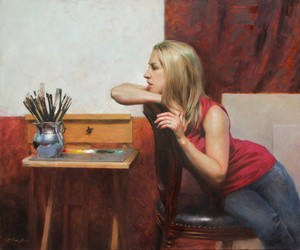
Thursday, March 24, 2016

Garth Stein at Copperfish Books -- Part 1

When Garth Stein's people contacted Copperfish Books to see if they'd host him for a talk while he was in the area, they jumped at the opportunity. What better way to get people into their fabulous new space than hosting the international bestselling author of "Art of Racing in the Rain"?  My friend and Book Expo companion Wendi was in town, and we snagged front row seats for Stein's talk. It was terrific.

Although Stein was technically promoting his latest book, "A Sudden Light," he kicked the event off with a discussion of "Art of Racing in the Rain." Here are some of the tidbits he shared:

--In Stein's former life, he was a documentary filmmaker. When watching a Mongolian documentary entitled "State of Dogs," he learned of the Mongolian legend that dogs can come back as humans in their next incarnation if they are ready. He later heard poet laureate Billy Collins' "The Revenant," in which a dog talks to his owner from the grave. (Click here to hear Collins recite the poem, which is decidedly not what most dog owners think of their dog's feelings towards them.)  Taken together, Stein came to believe that the smartest person in the world might in fact be a dog who can't talk or open a door. Enzo was born from this idea.

--Stein's original name for the dog was Juan Pablo. At the time he was writing the book, his wife was pregnant. In one of those "what should we name our child" conversations, he proposed the name "Enzo" if the baby was a boy.  His wife didn't think "Enzo Stein" had quite the ring she was looking for, though, and suggested he use the name instead for the dog in his book.  Marital negotiation at its finest.

--Stein had a lot of difficulty finding an agent willing to represent him in the sale of this book. The idea of a book narrated by a dog sounded too alternative and hard to market. "What do you know about being a dog?" his agent asked.  (Stein responded by asking what Victor Hugo knew about being a hunchback.) He fired the agent and went on the hunt for someone more open-minded. He was sharing his frustrations at an author event when Layne Maheu piped up. "You should talk to my agent," he said. "He's working with me on a book narrated by a crow!" The rest is history.  (FYI, Maheu's novel is called "Song of the Crow.")

--Enzo has proven so popular that Stein has written a book for middle schoolers ("Racing in the Rain: My Life as a Dog") and picture books for younger kids ("Enzo Races in the Rain!" and "Enzo and the Christmas Tree Hunt!")  The middle school adaptation required a few changes to make it more age-appropriate, but Stein drew the line at changing Enzo's references to "urinating" to "peeing." Enzo, he said, would never use that word.

--"The Art of Racing in the Rain" was on the New York Times Bestseller List for more than 156 weeks and has been published in 25 languages. Most recently, a Slovakian Reader's Digest version was published.

Next up will be Stein's insights on the writing process and his inspiration for the book he's actually promoting -- "A Sudden Light." 

Sunday, March 20, 2016

Edgardo Carmona's Iron Giants in Fort Myers

"El Vendedore de Raspao" (Snow cone vendor)
If you haven't been to the Eiffel Tower lately, you might not have seen Colombian sculptor Edgardo Carmona's wonderful "iron giants." Twenty-three of his sculptures have taken a respite from an 18-city European tour to spend some time in Fort Myers. When the exhibit closes, the works will be disassembled and sent to Marbella, Spain.

You might be wondering how the exhibit came to be in Fort Myers. Allure condo developer Eduardo Caballaro is putting together two super luxurious towers on Fort Myers' waterfront. Caballaro and Carmona were childhood friends in Cartagena, Colombia. When Caballaro shared Fort Myers' history (particularly the role of the Caloosa Indians) with Carmona, the artist felt his exhibit--with its focus on people who might otherwise go unnoticed--would fit right in. The fact that he could help his friend promote his new condo development didn't hurt either.

Janice and I with "Brisas"

Fort Myers' Public Art Committee was tasked with determining where each sculpture would be located, ensuring that foot traffic wouldn't be impeded and dealing with other logistics. The sculptures are scattered across downtown and are fabulous. At each stop there's a brochure with a map and a short description of the sculptures to guide you. (You can also get a copy by clicking here.  Neither the images nor the pictures here do the sculptures justice.)

The iron giants stand between 7-10' tall and weigh in between 700 and 1000 pounds. (The cost of getting the works here must have been astronomical.) The rusted patina is intentionally created using a special sandblasting technique.

Janice and I had the chance to hear the inside scoop on some of the works with an Allure representative. "Brisas" shows the strength of both women and the wind. The wind has lifted the woman's skirt, showing off her shapely butt cheeks. She's not concerned, however, about appearing immodest. Instead, she is harnessing the power of the wind with her umbrella. When viewing the work, you get no sense that she is being overpowered. Her feet are planted firmly on the ground and there's a sense of defiance in her posture. It's kind of like Marilyn Monroe meets the "Game of Thrones" Mother of Dragons. Happily, "Brisas" will be staying in Fort Myers to welcome people to Allure.  

"Territorio"
"Territorio" proved a bit controversial when the sculpture was uncovered. (The sculptures were draped before the exhibit's grand opening rather than going on display piecemeal.) It's a bit hard to see in the picture, but the sculpture depicts both a dog and a man using a street post to take care of business. (In case you're wondering, the post is part of the sculpture.) This little detail about the man had escaped the Public Art Committee when they reviewed images of the sculptures. Although there was a bit of flack, the sculpture has become one of the exhibit's most popular.  Some people think it's humorous; others recognize it as a fact of life. A watercolor artist painted an image of the work and printed it on a t-shirt. The shirts quickly sold out.  (FYI, Public Art Committee member Carolyn Gora said they did not consider eliminating the work from the show.)

"Vendedora de Frutas"
The attention to detail in Carmona's works is amazing. Each sculpture has facial expressions, hair and clothing that fit the individual being portrayed, be it the studious look of a professor (who happens to be the artist's father), the corkscrew curls of a fruit vendor or the open vest of a drummer. All of the women are adorned with jewelry and, if barefooted, have toe nails. The shoes have laces and bags have texture.

One of the most exciting things about the exhibit is the conversations being sparked between strangers about the art. It's difficult to walk by a sculpture without stopping to take it in. And as others do the same, it's only natural to chat about what you are seeing. It's a very cool way to create community.
"Cadencia"

I'll definitely return to Fort Myers to enjoy the sculptures again before they head off to Spain (perhaps, as Janice suggested, with a step ladder in tow so I can get even more up close and personal with the works). The exhibit was originally scheduled to close at the end of the March, but rumor has it that it's been extended to the end of April. If you have travel plans in your future, Carmona's "Duo Sinfonica" is on display at the Fort Myers airport.

A huge thanks go out to Allure for bringing this special exhibit to our area. 


Sunday, March 6, 2016

Creativity Abounds in Fort Myers Artist Studio Tour

I love artist studio tours. You get to poke around in creative workspaces and put faces with names of artists. And I've figured out that, for me, the quality of a tour isn't determined by whether I find a new piece of art for my home, but by the ability of the artists to speak thoughtfully and articulately about their creative processes. By all standards, the recent tour sponsored by the Lee County Alliance for the Arts was a great success. 

Jeffrey Scott Lewis
Dorrit and I started our tour with the artists in the Alliance's Edwards Building. Our first discovery was the work of Jeffrey Scott Lewis.  We were filing through his studio when I heard him say something about body paint. What???  Lewis' work for a gallery show entitled "Skin" began with a photo shoot of a guy painted from head to toe in liquid latex. The original concept had been for photographs of the painted body to be the art. But when the shoot was over and the model began peeling the paint off, Lewis kept clicking. The unplanned shots struck him as visually interesting while calling to mind the analogy of shedding layers of false identity. The work above Lewis in this picture is one example of the results. (In another work--included in the link above--you can distinctly see the model's shoulder and the sheen of sweat from wearing five layers of latex paint on a hot July day.) The photographs were then transferred onto metal, with the dye fusing into the material.  The final piece is an archival quality mixed media work. It's a perfect example of striking works made all the more interesting by knowing how they came into existence. 

"Mint Julep" by Mark Holman
When we walked into Mark Holman's studio space, a visitor who'd overheard me talking with Lewis said, "You're going to want to blog about this as well." Holman's shadow works were inspired by an evening walk with his dog. A convergence of yield and other street signs behind him projected an image that startled him into thinking an axe murderer was about to attack. (He said this only half jokingly.) After his pulse settled down, he started thinking about how the shadows created by light on a work can be more interesting than the piece on its own. Holman's work went through several iterations (all of which were on display) before he landed upon his current process. His sculptures are created by filling in embroidery hoops with theater gel on canvas. When unlit, the abstract white sculptures make their own statement. When lit, the works have a totally different look and feel. 

Carolyn Gora and Ava Roeder combine forces to present work under the name CAVA. The women taught together back in the 1970s and have both gravitated to art in their retirement lives, Carolyn as a fiber artist and Ava as a photographer and painter. A couple of years ago the duo went to Art Basel and were inspired by the collaborative artwork there. The women now work both individually and together, with Carolyn embellishing Ava's work with fiber that adds texture and a bit of whimsy. To make their point that the process is more important than the end product, tour-goers were invited to decorate tiles to be included in a collaborative work. Paints were available along with a box of photographs and some glue. My contribution was adding these two women from one of Ava's photographs to a tile that had the sunglasses already in place. Perhaps I have a future as a collage artist.

Reimenschneider and "The Black Keys"
Music played by a cool group of high school kids greeted us when we entered Eric Riemenschneider's exhibit space. Riemenschneider teaches design at a local high school and clearly inspires his students to express themselves in a variety of ways. (With my own appreciation for art instilled by Mrs. McKelvin, my high school humanities teacher, I know how important this influence can be.) I felt a bit stodgy when I didn't recognize the guys in his conte drawing as Patrick Carney and Dan Auerbach from The Black Keys (who have only been around since 2001). I did, however, recognize the skill with which Riemenschneider captured both their images and their personalities.

All in all, it was quite a fun outing. If your interest in checking out an artist studio tour yourself has been piqued, the 2016 Creators and Collectors Tour is taking place in Sarasota on March 11-12.  See you there! 


Monday, February 29, 2016

ECHO Global Farm in Fort Myers

I always take Maggie on an unexpected outing during her visits. Our trip to Solomon's Castle a couple of years back set a high bar for pure entertainment (not to mention kitsch). This year's outing found us at ECHO Global Farm in Fort Myers.

ECHO's mission is to develop sustainable farming techniques that use low or no-cost technology for dissemination to communities combating hunger. ECHO has impact centers in West Africa, East Africa, Thailand and the Caribbean. Its network extends to 4500 missionaries and church organizations in those regions. (Maggie and I were a bit concerned there would be proselytizing on the tour, but the guide focused solely on the agricultural aspects of the farm.)

ECHO's location was carefully selected for having the worst soil in Florida, an environment similar to that of the countries where ECHO's solutions are made available. Our guide referred to the 50+ acre farm as a "living classroom." Interns receive 14 months of training before heading out into the field. More than 250 students have been trained at ECHO.

Shelter made from bamboo
Our first stop was a lesson in the many uses of bamboo. The hard wood can be used to build houses, barns, fences and bridges.The trees grow quickly--five to six feet per year--and their foliage can be used to feed animals. We saw structures throughout the facility that had been built by residents using "appropriate technology;" i.e., tools and materials readily available at essentially zero cost.

We learned that 75% of the world's food is generated from 12 plants and five animal species. ECHO's small duck and tilapia pond was one example of a sustainable food source. Ducks were chosen because their eggs have the highest level of protein while tilapia are the fish of choice because they reproduce when quite small. The ducks are housed in a wire cage where their droppings fall into the water and grow into algae. The tilapia live off the algae. According to our guide, many villages would be able to live off the food produced from the tiny pond. 

A turken
The farm also raises goats, rabbits and turkens (a hybrid turkey/chicken). A mature nanny goat can produce five-six pounds of fresh milk daily. One rabbit will provide a meal with protein for a family of five (and, of course, rabbits breed frequently).  And the turken has a third less feathers than a regular chicken, with the excess energy expended to create bigger eggs and meatier legs. Chicken poop is also an excellent fertilizer. These animals come in handy for the interns, who are required to eat one week each month only from what they can find on the farm.

Interns working monsoon-ready raised beds


The farm has different areas whose environments mimic those of the regions where ECHO's work will be shared. One area featured raised beds where crops can be planted in a way that will protect them from drowning during monsoon season. (This is the way strawberries are grown here in Florida.)  Another area had steep land where terraces had been created using rocks, rail ties and deep rooted plants.  Plants on trellises are found throughout the farm because growing them in this way enhances their ability to survive and thrive.

Perhaps my favorite farm area, though, was the urban environment. Again, ECHO looks for materials readily available for would-be farmers, and they've landed upon discarded tires as a convenient garden planter. Once the side walls are cut out and they are filled with soil, tires are a habitable environment for a backyard or rooftop garden. It seems kind of brilliant to me.

ECHO has a separate tour relating solely to "appropriate technology" that I'm sure would be quite fascinating. We learned that twenty types of water pumps have been developed that require no electricity. We also were given a demo of a biogas digester created from an old barrel that can provide five months of fuel for a family of five.The creativity would make McGyver proud.

So much information was presented that my head was spinning by the time our 90 minute tour was over. I came away amazed at the ingenuity and selflessness of people dedicated to helping alleviate world hunger. It really is quite an operation.

If you're interested in learning more about ECHO, their Global Food & Farm Festival on March 19 would be the perfect opportunity. According to ECHO's press release, "the festival features samplings of exotic foods, a tropical rain forest demonstration, tours of the farm’s 300-variety seed bank and fruit tree arboretum, and educational programs about the connection between food and cultures. Farm visitors will have the opportunity to crush sugar cane and peanuts and taste the results. And there will be live 30-minute cooking demos on stage, featuring a very diverse group of local chefs. At the end of each session, the chefs will serve the dishes they’ve prepared.” It sounds like a great way to spend an afternoon. 


Saturday, February 20, 2016

Disney and Dali: Architects of the Imagination

Although I refer to my friend Maggie as my bridge partner, the characterization has become less apt as time passes. Admittedly, we do arrange our visits so we can play in a tournament in our quest for those elusive gold points. (Don't ask.) But we also spend lots of time exploring, and Maggie's visits to Florida always include a stop at the Dali Museum. This year was no exception.

With Salvador and Walt
While the Dali has a very cool permanent collection (best explored with one of their docents), the Museum also brings in special exhibits by other artists or creatives. I was a bit disappointed by both the Warhol and Picasso exhibits, which had great potential but fell a bit flat. But the current exhibit highlighting the collaborations and parallels between Dali and Walt Disney is a real winner.

Our time was limited, so I didn't have a chance to explore the whole exhibit. Luckily, Maggie had wandered off and I did a quick spin through the show to find her. I came upon a line at the exit to the show which, of course I got on. (With the Disney theme, I thought it appropriate that I had to spend some time in a queue.)
Dali's Archaeological Reminiscence of Millet's "Angelus"
The line was for a virtual reality experience that brought viewers into Dali's imagined world of his 1935 work Archaeological Reminiscence of Millet's "Angelus." Three seats were set up in front of large screens. When a viewer sat down, a set of goggles and headphones were placed on her head. To get started, you position the dot in the goggles on a white ball on the screen. From there, you navigate Dreams of Dali by moving from dot to dot. It was INCREDIBLE. The three minutes flew by, and I wanted to get right back on line to do it again. (To get a sense of what the experience is like, watch the videos in this link.)  But time was short and there was more to see.


Chronos with Dahlia as nose and eyebrows
The exhibit also contained clips from "Destino," a project Dali and Disney embarked upon in 1945. Dali and Disney studio artist John Hench spent eight months storyboarding the film before Disney pulled the plug. (Although the official reason for the project falling apart was that WWII affected Disney's bottom line adversely, it's not a stretch to imagine that Walt found surrealism a bit too out there for his--and Disney followers'--taste.)

Walt's nephew Roy discovered the project in 1999 and decided to bring it to fruition. Although both Dali and his wife Gala were dead by this time, Gala's journals yielded information about what Salvador had in mind. And illustrator John Hench was still alive to help bring the storyboards to life.

"Destino" is set to a ballad by Armando Dominguez and tells the story of the god Chronos' ill-fated love for the human Dahlia. You won't be alone if you can't quite follow the story line of this short film. But it's both beautiful and strange and fascinating to watch. (Click here to watch the film, which was nominated for the 2003 Academy Award for Best Short Animated Film.)   

The exhibit runs through June 12 and is well worth a visit to St. Petersburg to see. 

Sunday, February 14, 2016

The New World by Chris Adrian and Eli Horowitz

The "Rooster Award" goes to the ToB winner.

For the past 12 years, the Morning News has run its Tournament of Books. It's a competition that, in their own words, is stupid.  "Books aren't basketball players," the website points out. "Stories don't care about other stories....The Tournament of Books (ToB) is actually less an award or event, more a long heated chat about books and reading and writing and what makes literature good or bad or something in between."

In years past, I've taken a look at the list of books with interest and a vague idea that I might try and read along. The brackets (hence the reference to basketball) are announced late January, with the one-on-one competition between books kicking off in March. But who has the time? This year's list, though, contained two books I'd already read -- Lauren Goff's Fates and Furies (loved it) and Hanya Yanagihara's A Little Life (confused about all the hype). I decided to read a couple of other books on the short list.  And so I discovered The New World by Chris Adrian and Eli Horowitz.

The premise of the book is, admittedly, odd.  Jane is a pediatric surgeon who's been away at a conference. When her flight lands and she turns on her phone, there are dozens of texts and voicemails about her husband Jim's collapse.  Her seatmate clears the way for her to get off the plane, to the front of the cab line and into a taxi where she wishes the driver had a siren to deliver her to the hospital more quickly.  "She imagined rolling down [the window] and making a wailing siren of her mouth and her head, and she could see the cartoon image very clearly -- her neck stretched impossibly long and her eyes flashing and spinning, one red and one blue, her lips oversize and overdefined, wrapping sensuously around every howling O up the Grand Central Parkway and clearing a path." 

When Jane arrives at the hospital, she learns that her husband has died.  And here's the odd part--his head has been taken away to be cryogenically frozen. Unbeknownst to her, Jim signed on with Polaris, a cryogenics company, to be part of the future. 

The balance of the slim novel alternates between Jim navigating his new world (hence the title of the book) and Jane trying to come to terms with Jim's decision.

"Greetings and salutations!" Jim's (social worker) tells him. (Parentheses are used around words to indicate they are not quite right for the future but represent concepts the recently deceased can understand.)  Jim, in his current iteration, is stunned to learn that he is alive in some sense. "You have always been alive," he is told, "But now you are awake." But in order to fully reconstitute himself, he has to try harder. "Jim noted the absence of eyelids to shut tight, or hands to squeeze into fists, or buttocks and a jaw to clench--everything he was accustomed to doing when he was really trying at something.  Instead, he tried to muster their interior equivalents...an effort like internal pooping."  (Jim had used this analogy in the past as he thought about his attempts as a humanist chaplain to pray.)

Meanwhile, Jane is also in contact with the Polaris people, who express sympathy for her "perceived loss." She just wants her husband's head back.  Without it, "..it felt somehow like Jim had left her for somebody else, like infidelity added to death."

I want to go on sharing passages from the book that made me sit up and take notice of the words and the ideas behind them. But you should discover for yourself the emotions this book both reports and evokes. There's humor and sadness and the joy of real love. And despite my desire to let you find the parts of the book that speak to you, there's one more excerpt I can't resist sharing. At one point Jim is talking about Jane to Alice, his (social worker), and says, "Who cares about love? That's the easy part.  It's only the first part. We were in life together, Alice. We were in life!" What a simple yet powerful way to describe their relationship.

Ultimately, The New World is a story not about cryogenics or the future but about a marriage. I'm curious why it's not up against Fates and Furies in the Tournament of Books. Regardless, I'm looking forward to reading the tournament commentary on this book, which I'm heartily rooting for to win. And I'm appreciative of the ToB introducing me to The New World, a novel I'm fairly certain I never would have found on my own.  Read it! 

Saturday, February 6, 2016

Looking at Art with Jeffrey T. Larson

One of the perks of chairing the National Art Exhibition at the Visual Arts Center is having the opportunity to get up close and personal with the juror for the show. And while it's always fun to watch the juror as he goes through the judging process, this year's experience with Jeffrey T. Larson was, in a word, fabulous. 

David's "Napoleon Crossing the Alps"
Jeff studied at Atelier Lack, a program that "focuses primarily on teaching fine draftsmanship and painting skills leading to the creation of well constructed artwork."  What's cool is that the instructional lineage of the school can be traced back to the Neo-Classical artist Jacques-Louis David who painted, among other famous works, "Napoleon Crossing the Alps."  

Jeffrey Larson's "Electrolux"
So it comes as no surprise that Jeff is a representational artist focused on the craft of painting (although you might not put his "Electrolux" up against David's "Death of Marat" and immediately see the connection.)  As an aside, when asked about the painting, Jeff shared that his mother-in-law had told him and his wife Heidi that if they ever came across an Electrolux, they should snap it up. They found one at a garage sale and did as instructed. Although it didn't work well as a vacuum cleaner, Jeff found the streamlined design of the machine an interesting subject.  

Jeff's first introduction to the 134 works he had chosen for this year's show (from a field of 633) came when he and Heidi walked into a gallery overflowing with artwork. Paintings hung in a haphazard fashion on the walls; some were on the floor leaning. Despite the chaos, a smile broke out across his face as he saw the artwork he'd previously viewed in 3x3 thumbnail photos online.  He was happy with his selections. "Every work," he said, "Has something, a little spark." 

Anna Bain "Self-Portrait in the Studio"
The hardcore judging took place the next morning, which Jeff spent studying the works and eliminating. Eventually, the only paintings hanging were those he was considering for a prize. Co-chair Ingrid Carroll's and my job was to be on hand to answer basic questions -- more or less to be flies on the wall as the judge went about his business. But Jeff was downright voluble as he shared his thoughts with us about different works. 

He turned Anna Bain's "Self-Portrait in the Studio" upside down to look at the composition. (I'd seen this trick before in a critique session, but it's always striking. It was funny when someone came into the gallery and said, "Well, I guess that work's out of the running."  Au contraire.) He loved the work's balance and the way all lines led to the artist's face. The work received Second Prize in the show.

Dominic Avant "Pizzicatto"

He talked about his characterization of Dominic Avant's "Pizzicatto" as a genre piece rather than a portrait. Knowing that Dominic's 14-year old son had sat for this painting, I was curious about the difference. In a portrait, he said, your focus is on the individual. Who are they? What are they thinking? In a genre work, the focus is on the setting, the activity. The motion of the cellist's hand as he plucks the strings draws the viewer's eye rather than his face. The work received Third Prize in the show.

Bill Farnsworth "On the Line"

Bill Farnsworth's "On the Line," which won Best of Show, captured Jeff's attention because of the way the artist created different points in the painting that draw the viewer's eye in.  Some paintings, though skillful, lead your eye off the canvas and onto the next work.  Farnsworth's dollops of light and the sense of movement from the waves force the viewer's eye to keep circling around and considering the work. It's a manipulative artistic technique that an uneducated viewer (like me) might not even realize is happening. 

James Wolford's "Friendship House"
It was interesting to hear Jeff comment that he could tell certain works had been painted from a photograph.  How did he know, you might ask (as I did).  Jeff pointed out that when the human eye is looking at, say, a house, you focus on one point and the hard edges soften. (He referred to them as "lost edges.")  In James Wolford's "Friendship House," the rooflines are uniformly distinct, a sign the artist painted from a picture (after, Jeff was certain, many studies of the work).  Photo-realistic paintings are neither good nor bad, just a technique that the viewer might appreciate. (While "Friendship House" did not win a prize, Wolford's "USS Constitution" garnered an Excellence Award.)

The National Art Exhibition will be on display at the Visual Arts Center through March 12. If you're in the area, it's a show worth seeking out -- even if you don't have the benefit of Jeff Larson's commentary along the way. And for a bit more insight into the show, check out Nancy Stetson's article in Florida Weekly: A Good Year for Art.


Sculpture at the Mount

"Two Together" by Joy Brown  Edith Wharton is best known as a novelist, with several of her works having been made into movies. Th...